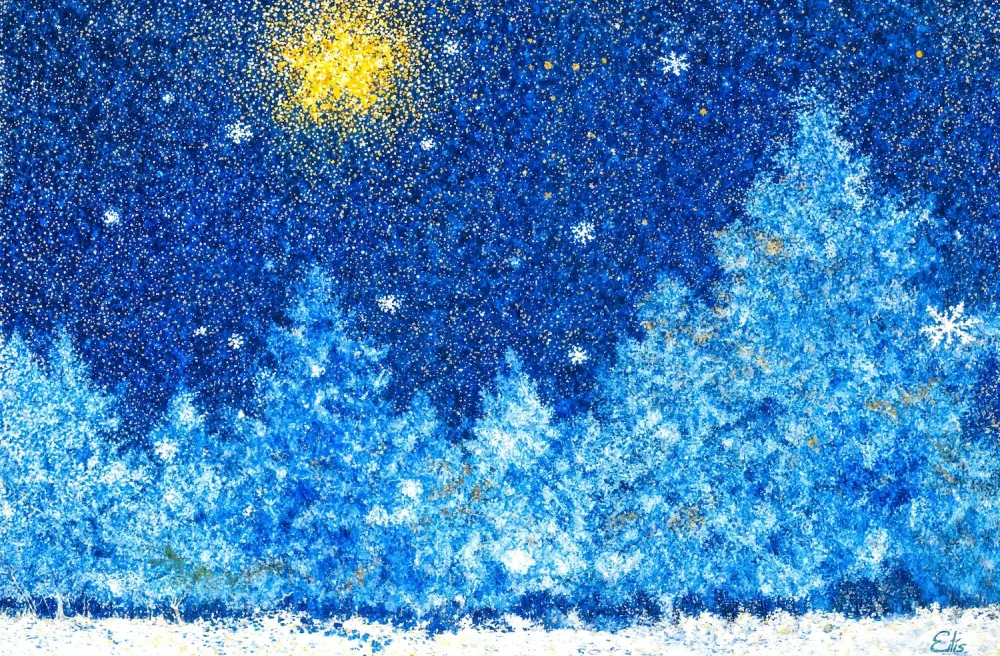
Forty-Seven Rings of Age
A tree's Testament
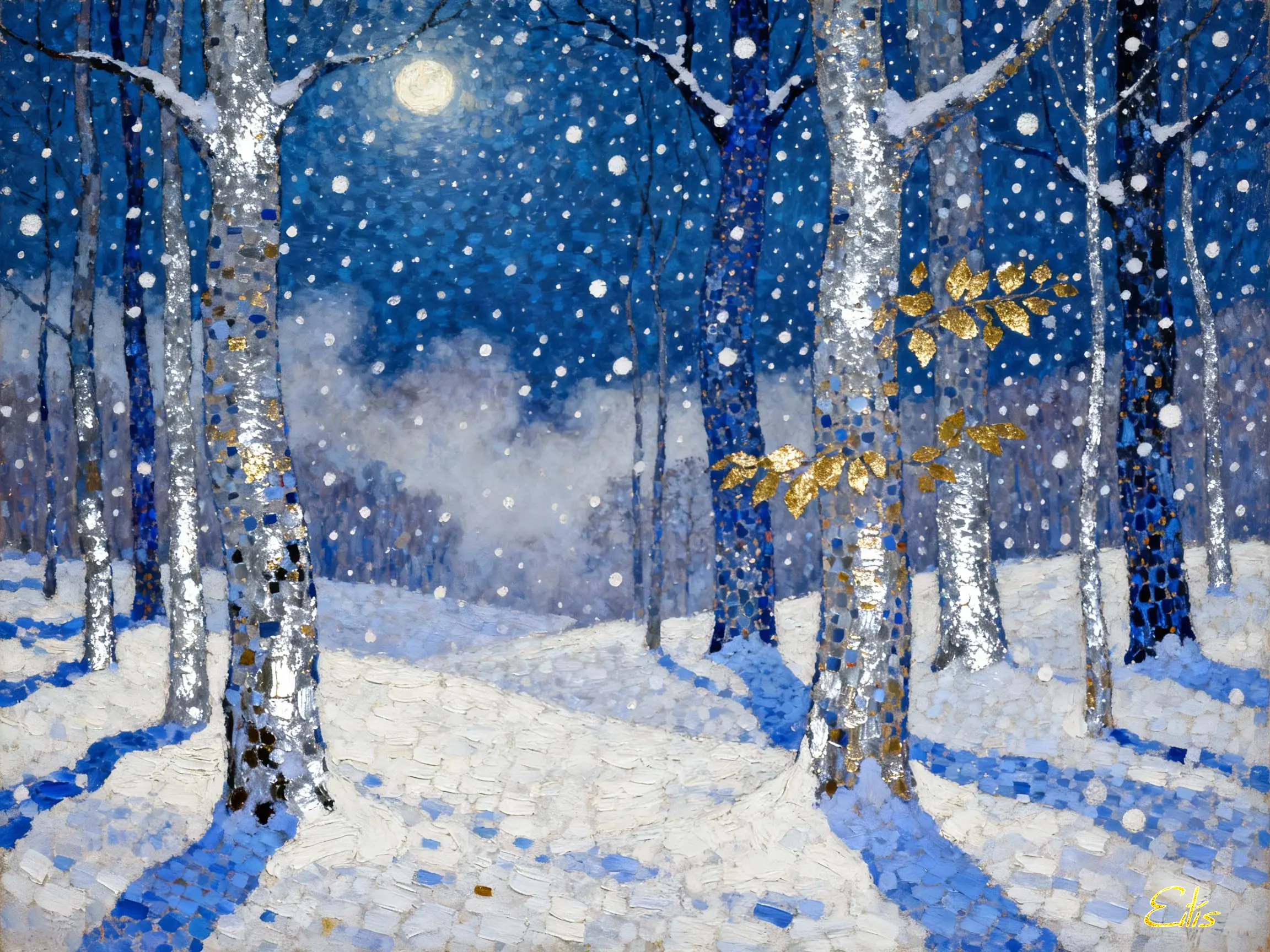
The tree had grown accustomed to the particular quality of December light—thin and precise, filtering through the forest canopy with a clarity that seemed to sharpen the world's edges. It was the sort of light that made everything vivid and somehow final, as though each moment were being committed to memory even as it occurred.
She had stood in the same position for forty-seven years, her roots extending deep into the loam where her mother's roots had once reached, and her grandmother's before that. The forest floor held memory in layers—decomposed needles from centuries of seasons, the slow accumulation of organic matter that spoke of continuity, of cycles that repeated with a kind of inevitability she had never questioned until the morning the men arrived.
They came in the pre-dawn darkness, their breath forming clouds in the frozen air. She felt their presence before she saw them—a disturbance in the stillness that had surrounded her since the first frost. The younger man's hands, she noticed, trembled as he positioned the saw. Not from cold. Something else resided in that tremor, something that suggested he was aware, on some level he perhaps couldn't articulate, of what he was about to do.
The blade's first touch against her trunk sent a shudder through her entire length. It was not pain, exactly—she possessed no nervous system to translate the sensation into anything resembling human suffering—but rather a profound wrongness, a severance not just of wood fibre but of connection. Each stroke of the saw was a small violence, a methodical undoing of decades of patient growth.
She thought of the spring when she had been merely a seedling, pushing through the needle-strewn earth towards a light she could sense but not yet see. The effort of that upward striving had seemed, then, like the whole of existence—a pure, uncomplicated reaching towards something essential. She had not known, in those early years, that she was part of a vast network of roots and mycorrhizal connections, that her mother tree was feeding her through underground channels, sharing glucose and nutrients, whispering warnings through chemical signals about drought and beetle infestations.
The saw continued its work. She could feel herself beginning to list, the physics of her own weight suddenly working against her. The younger man stepped back, and the older one—his face weathered in a way that suggested he had performed this task too many times to count—called out a warning. Then she was falling, the world tilting in a way that seemed to happen both instantly and with agonising slowness.
The impact against the frozen ground reverberated through her trunk. She lay there, still alive in the way trees remain alive for some time after cutting, the vessels in her sapwood still drawing what moisture they could from tissues that had not yet registered their own death. Around her, the forest continued its winter stillness. A crow, disturbed by the commotion, called out once and then fell silent.
They loaded her onto the lorry with a casual efficiency that suggested she had already become, in their minds, a commodity rather than a living thing. The journey into town was a series of jolts and vibrations, the world passing by at angles she had never experienced—horizontal glimpses of sky, of buildings, of streets lined with other trees who stood in their designated spaces, their roots confined to small squares of earth surrounded by concrete.
The garden centre smelled of plastic and fertiliser, an artificial approximation of the forest's complex aromatic signatures. They stood her upright in a metal stand, and for a moment, the verticality felt almost natural. But the base of her trunk sat in nothing—no soil, no connection, just empty air and the cold grip of metal. She was surrounded by others like her, a forest of the displaced, each one slowly dying in the fluorescent glare.
The woman who eventually chose her had kind eyes. The tree noticed this immediately—the way she ran her hand gently along the branches, testing their resilience, her fingers careful not to damage the needles. She was perhaps forty, with lines around her mouth that suggested she smiled often but was not smiling now. There was a particular set to her shoulders, a tension that spoke of someone carrying concerns she could not quite name.
"This one," the woman said to her husband, and something in her voice held a note of apology, though the tree suspected the woman herself was not aware of it.
The house was warm—too warm. The tree could feel her needles beginning to dry within hours of being positioned in the corner of the sitting room. The family decorated her with a tenderness that might have been touching if it weren't so thoroughly beside the point. The woman's daughter, perhaps seven or eight, carefully hung ornaments on her lower branches, her small face serious with concentration. The girl's fingers were gentle, and the tree thought of the chickadees who had nested in her branches three summers ago, the delicate grip of their talons as they perched on her twigs.
They strung lights along her limbs—small electric bulbs that glowed with a warmth that was nothing like sunlight but which seemed to please the family enormously. Each evening, they would sit in the darkened room and simply look at her, their faces soft in the artificial glow. The tree understood, dimly, that she had become a focal point for something—not for what she was, but for what she represented in their collective imagination.
The daughter often sat cross-legged on the floor nearby, reading or drawing, and sometimes she would speak to the tree in a low voice, as though they were co-conspirators in some unspoken arrangement. "You're the most beautiful tree we've ever had," she whispered one night, her breath warm against the tree's lowest branches. The tree felt the girl's wonder like a physical thing, and for a moment, she almost understood the appeal of this strange ritual—the way humans seemed to need to bring the outside world inside, to domesticate wildness into something they could control and comprehend.
But with each passing day, she could feel herself diminishing. The needles lost their supple quality, becoming brittle and sharp. The sap in her vessels grew sluggish, then stopped moving altogether. She was dying in increments, and the family seemed not to notice, or perhaps they noticed but had agreed, tacitly, not to acknowledge it. This was part of the ritual too, she realised—the gradual dying was acceptable as long as it happened slowly enough, decorously enough, confined to the designated season.
On Christmas morning, the house filled with noise and paper and laughter. The daughter received a book about forests, and the tree watched as the girl paged through illustrations of trees that looked remarkably like her former self—rooted, whole, part of a living system. The irony was not lost on her, though she lacked the capacity for bitterness. She simply observed, as she had observed the passage of seasons in the forest, the way one observes a truth that exists independent of one's feelings about it.
The woman, she noticed, paused sometimes while tidying wrapping paper or washing dishes, and looked at her—really looked at her—with an expression the tree had come to recognise as regret. The woman's hands would still in whatever task they were performing, and something would shift in her face, a tightening around the eyes that suggested she was seeing, perhaps for the first time, what stood before her. Not a decoration. Not a tradition. But a life that had been conscripted into the service of another species' celebration.
One evening, after the children had gone to bed, the woman stood before the tree in the darkened room. The coloured lights threw shadows across her face, and the tree saw that she was crying—quiet tears that she made no move to wipe away. The woman reached out and touched one of the tree's branches, her fingers gentle, and whispered, "I'm sorry. I'm so sorry."
The words hung in the air between them. The tree understood that the woman had perhaps always known, on some level, what this ritual entailed. But knowing and truly seeing were different things, and something had shifted in the woman's perception, some barrier between intellectual knowledge and visceral understanding had dissolved.
By New Year, the tree's needles were falling in earnest, creating a brown carpet beneath her branches. The family swept them up daily, but still they fell, a slow shedding that was both literal and metaphorical—she was releasing her last hold on the form she had maintained, returning to constituent parts even as she stood upright in her metal stand.
When they finally carried her out to the kerb, the January air felt sharp and clean after the stifling warmth of the house. She lay there among other discarded trees, a small forest of the fallen, and stared up at the winter sky. Stars were visible between the streetlights, the same stars she had observed from the forest clearing, though from this angle, pressed against frozen pavement, they seemed farther away.
A fox passed in the early morning hours, pausing to sniff at the trees with a curiosity that was purely animal, untinged by sentiment or guilt. The fox moved on, and the tree felt a kind of kinship with it—both of them were simply following the trajectories their lives had taken, making no judgements about fairness or meaning.
The lorry that collected her was less careful than the one that had brought her from the forest. She was tossed onto a pile of her fellows, all of them stripped of ornaments and lights, reduced to what they had always been—wood and needles and the drying memory of life. At the recycling centre, they would be chipped into mulch, and in this, at least, there was a kind of return. Not to the forest she had known, but to the earth, to the cycle of decomposition and renewal that had always been her eventual destination.
As the lorry jolted through the grey streets, she thought of the woman's tears, of the daughter's gentle fingers on her branches, of the way the family had gathered in her presence as though she could provide something they needed. Perhaps she had, in some way she couldn't fully understand. Perhaps her presence had allowed them to access something—a connection to wildness, to the natural world they had largely exiled from their lives—even if that connection came at the cost of her own existence.
She thought of her mother tree, still standing in the forest, feeding the younger saplings through the mycorrhizal network, passing on the chemical vocabulary of survival. She thought of the chickadees and the particular quality of morning light filtering through fog. She thought of the slow, patient work of photosynthesis, of drawing water up from deep soil, of the satisfaction—if satisfaction was the right word—of growing a few millimetres taller each season, of surviving another winter, another drought, another storm.
The lorry turned a corner, and through the slats of the truck bed, she caught a glimpse of the horizon where the town gave way to fields and, beyond them, to the dark line of forest. It was too far away for her to sense whether her mother tree still stood, whether the spot where she had grown for forty-seven years remained empty or if a seedling had already begun pushing through the needles towards light.
But she knew, in the way that trees know things—through root and nutrient and the slow language of seasons—that the forest continued its patient work of living and dying and living again. The cycle was larger than any individual existence, larger than the well-meaning family who had wanted her beauty in their home, larger than the men with saws who arrived each December to harvest what the forest had grown.
She had been part of something vast and interconnected, and now she was being returned to it, though not in the way she might have chosen if choice had been available to her. But trees did not operate on the axis of choice. They grew where their seeds fell. They reached towards light. They weathered what came. And when they fell—whether to saw or storm or the simple rot of age—they became the foundation upon which the next generation would grow.
The recycling centre loomed ahead, and the tree felt herself entering the final phase of her transformation. Soon she would be nothing recognisable—just chips of wood that smelled faintly of Christmas, scattered across flower beds and garden paths, slowly breaking down into the elemental components that had always comprised her.
In the end, she had been witness. To the forest's cycles, to the family's celebration, to the woman's tears, to the daughter's wonder. She had stood in one place for decades, and then had been moved against her will into another place, and in both locations she had simply continued to be what she was—a tree, with all that entailed. The meaning humans assigned to her existence, the guilt or joy or nostalgia they felt in her presence, these were their concerns, not hers.
But if she could have spoken in a language they would understand, she might have said this: that every tree they cut for their celebrations had stood for years or decades in a specific place, part of a specific web of relationships. That each tree had weathered storms and droughts, had provided shelter and food for countless creatures, had drawn carbon from the air and released oxygen in return. That the rings they might glimpse in a cross-section of trunk were not merely decorative patterns but a record of survival, of adaptation, of the simple, persistent fact of life finding a way to continue.
She might have said that there were other ways to celebrate, ways that did not require this annual harvest of living things. But she also understood that humans were complicated creatures, caught between their love of nature and their desire to possess it, to bring it inside and make it theirs.
The lorry stopped. The men began unloading. Soon she would be fed into the chipper, and her voice—such as it was—would be silenced completely. But voices, she knew, were not the only way to communicate. The chickadees would remember her branches. The soil that had held her roots would remember her passage. The daughter might remember the way the lights looked on Christmas morning, and perhaps, when she was grown, she might choose differently.
Memory persisted in ways that had nothing to do with consciousness or intention. The forest would continue. The cycles would continue. And somewhere in the complex network of root and fungi and soil microbes, her atoms would find their way back to the system from which they had come, contributing their small part to the vast, patient work of growth and decay that had been proceeding long before her and would continue long after.
The chipper roared to life, and the tree felt herself being lifted towards it. In her last moments of coherence, she thought of light—not the artificial glow of Christmas bulbs, but the precise, clear light of December mornings in the forest, the way it fell through branches and illuminated the frost-covered needles, making each one a small miracle of crystalline beauty.
That light had been enough. It had always been enough. And if she could have gifted the family anything, it would have been this: the understanding that they did not need to cut down trees to experience wonder. The wonder was already there, in the forest, in the persistent fact of life renewing itself season after season. All they had to do was look. Really look. And see what had been there all along.